Product Introduction
Adjustable leather dog collar with stitched edges, buckle, D-ring and branding details, available in six sizes for wholesale, boutique and private-label pet accessory ranges.
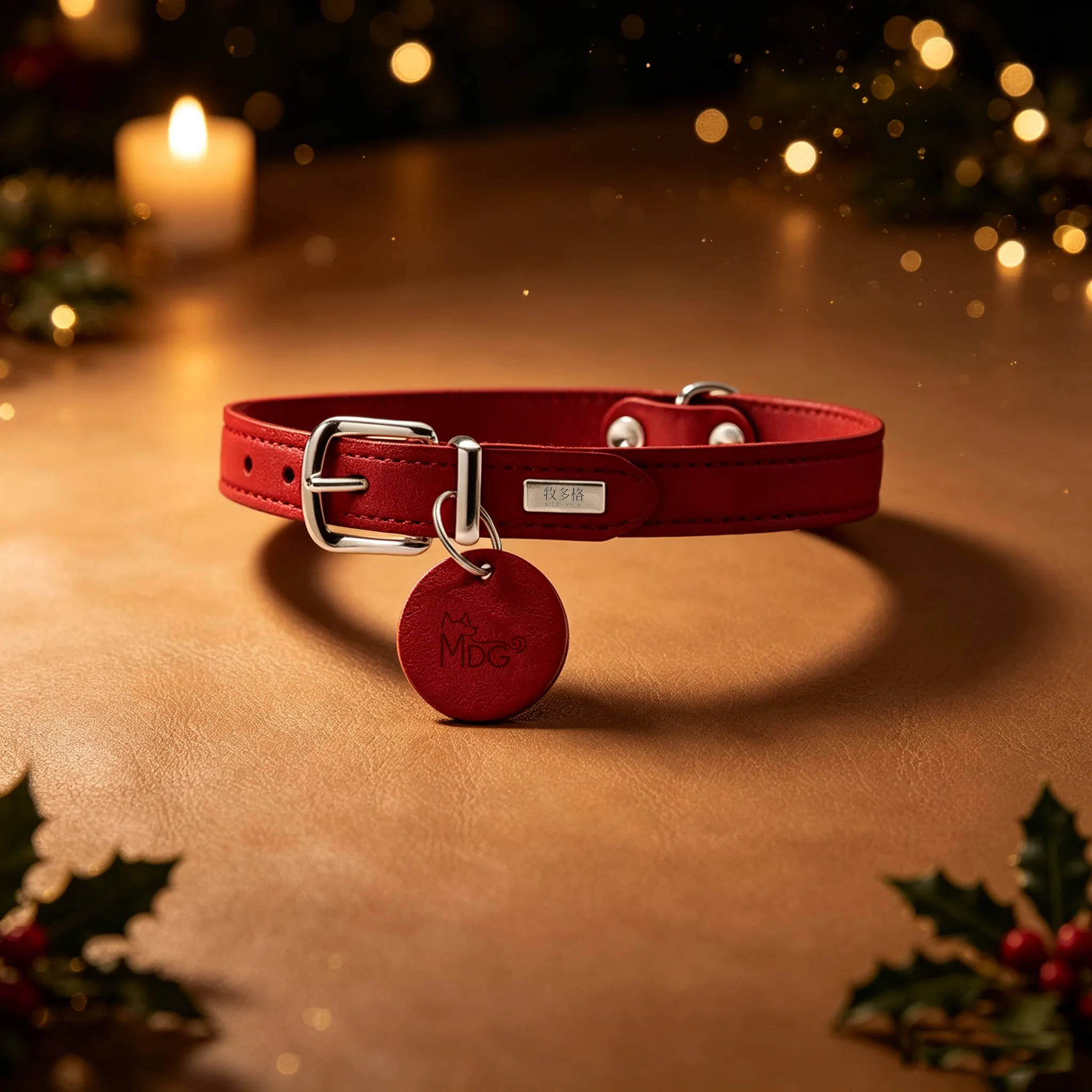


The leather dog collar combines a classic belt-style buckle with stitched edges, multiple adjustment holes, metal hardware, and dedicated areas for branding or identification. Designed for dogs, the range includes six listed sizes covering neck circumferences from 23 to 52 cm. Collar width increases from 1.2 cm for the smallest size to 2.5 cm for the largest, helping the proportions remain suitable across different dog sizes. The supplied specification lists a consistent thickness of 0.3 cm. Its red leather appearance and polished hardware create a refined presentation for pet boutiques, online retailers, dog apparel brands, gift collections, and private-label accessory programs. Final colors, hardware specifications, logo methods, packaging, testing documents, MOQ, and delivery arrangements should be confirmed for each order.
A leather collar remains a familiar category for pet retailers because its traditional appearance works across everyday, lifestyle, and gift-oriented collections. This design uses a flat leather strap with visible edge stitching and a conventional pin buckle.
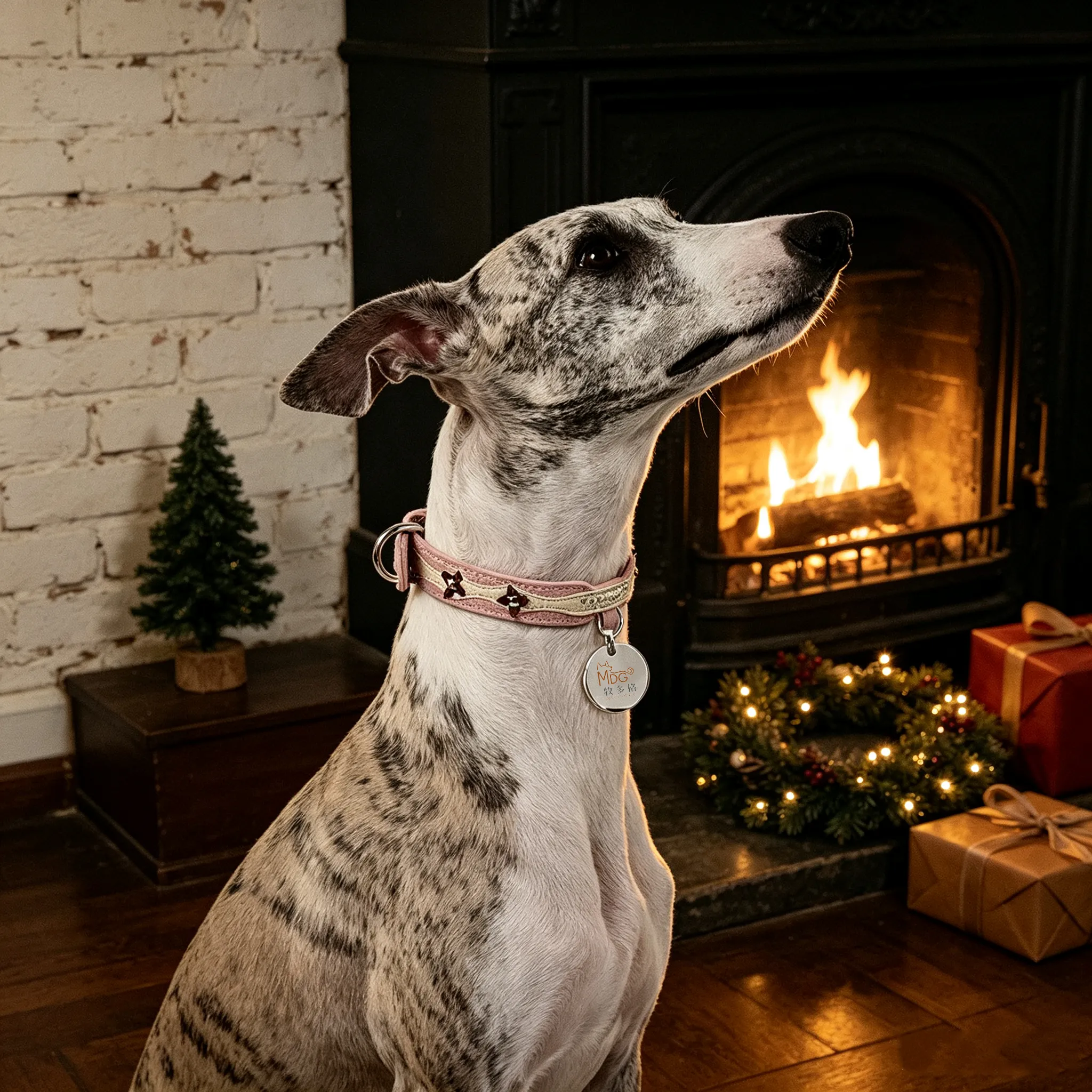
The product images also show adjustment holes, a metal keeper, riveted hardware, a rear D-ring, a small rectangular brand plate, and a round hanging tag. Together, these elements create several possible branding and identification points.
The buckle allows the collar to be adjusted within its intended size range. Meanwhile, the D-ring provides a visible attachment point for a leash or tag. Buyers should confirm the intended use and required performance of every ring and fitting before approving production.
Because the hardware material and load performance have not been supplied, the collar should not be described as stainless steel, brass, rustproof, heavy-duty, or suitable for a specific pulling force without supporting documentation.
The following information is taken directly from the supplied product data and size chart.
| Item | Specification |
| Product | Leather Dog Collar |
| Intended Pet | Dog |
| Main Material | Leather |
| Available Size Labels | XS, XS–S, S, S–M, M, L |
| Neck Circumference Range | 23–52 cm across the listed sizes |
| Collar Width | 1.2–2.5 cm, depending on size |
| Collar Thickness | 0.3 cm |
| Closure | Pin buckle shown in product images |
| Visible Hardware | Buckle, keeper, D-ring, rivets and tag ring |
| Branding Areas | Rectangular plate and hanging tag shown |
| Color | Red shown; final availability to be confirmed |
Leather grade, lining material, hardware composition, product weight, total strap length, adjustment-hole spacing, color range, packaging dimensions, and carton information have not been provided.
| Size | Neck Circumference | Collar Width |
| XS | 23–26 cm | 1.2 cm |
| XS–S | 27–30 cm | 1.4 cm |
| S | 32–37 cm | 1.6 cm |
| S–M | 38–42 cm | 1.8 cm |
| M | 39–46 cm | 2.0 cm |
| L | 47–52 cm | 2.5 cm |
Collar thickness: 0.3 cm
The supplied chart notes that measurements are taken manually and may have slight variations. Dogs also differ in neck shape and coat volume, so owners should measure the individual dog before selecting a size.
The supplied ranges do not list a size for a 31 cm neck. In addition, the S–M and M ranges overlap between 39 and 42 cm but use different collar widths. Buyers should confirm how these boundary measurements should be handled before publishing a customer-facing chart.
Accurate sizing affects comfort, product presentation, and safe everyday use. Choosing a size from breed or body weight alone can lead to an unsuitable fit.
Use a flexible tape around the part of the neck where the collar will normally sit. Keep the tape flat against the coat, but do not pull it tightly into the skin.
For long-haired dogs, measure with the coat in its usual condition. Compressed fur can produce a measurement that is too small for everyday wear.
The collar should sit securely without restricting breathing, swallowing, panting, or normal head movement. Owners should follow an appropriate fit check for the individual dog and inspect the collar after adjustment.
A loose collar may slip over the head. A collar that is too tight may cause pressure or irritation. Retailers should provide clear fitting guidance and advise customers to recheck the fit regularly.
Width increases with size, from 1.2 to 2.5 cm. Buyers should consider both neck circumference and the physical proportions of the dog.
For dogs within the overlapping S–M and M ranges, the difference is not only the size label. The S–M collar is 1.8 cm wide, while the M collar is 2 cm wide. A physical fitting sample can help determine which proportion is more suitable.
Puppies and young dogs can change size quickly. Their collar fit should be checked frequently and adjusted or replaced when necessary.
The collar does not use the same width for every neck range. Instead, the strap becomes wider as the size increases:
This graduated structure gives buyers a more balanced product range. Narrower straps create a lighter visual proportion for smaller necks, while wider collars give larger sizes a more substantial appearance.
The six size labels can also support a more detailed retail assortment than a basic small, medium, and large range. However, distributors should confirm the complete strap length, adjustment-hole positions, and measurement tolerance for each size during sampling.
Visible stitching runs along the collar edges and around the shaped leather sections. This gives the product a finished appearance and helps define the structure of the strap.
A physical sample should be used to evaluate:
Leather is a natural or processed material category with many possible grades and finishes. Since the exact type has not been specified, buyers should request a clear material description before creating retail claims.
Terms such as full-grain, top-grain, vegetable-tanned, genuine leather, bonded leather, or waterproof leather should only be used when the supplied material and documentation support them.
The pictured collar uses a pin buckle similar to a traditional belt closure. Multiple holes allow adjustment within the selected size.
A D-ring is positioned on a riveted leather section. This creates a defined point for a leash or accessory. A separate ring near the buckle holds the round tag shown in the images.
The rectangular plate and round hanging tag may support several product strategies:
Engraving, printing, embossing, plate customization, and personalized identification are not confirmed features. Buyers should submit their artwork and intended content for a feasibility review.
Before marketing the collar for leash attachment, confirm the D-ring, buckle, rivets, leather strap, stitching, and complete assembly against the required test method. The visual presence of hardware does not establish a specific load rating.
The red leather finish provides a distinctive alternative to standard nylon webbing collars. Retailers can display it alongside matching leads, harnesses, identification tags, and dog apparel.
The six-size chart supports a detailed product listing. Online sellers should include measurement instructions, collar width, thickness, close-up hardware images, and fit guidance.
The visible brand plate and hanging tag create potential identity points. A private-label program can coordinate the collar with matching walking accessories or seasonal color collections.
The traditional leather appearance and polished hardware suit boutique merchandising, gift displays, and curated lifestyle collections.
The collar may be offered as a take-home accessory. Staff should avoid fitting or selling a collar without checking the dog’s neck measurement.
The red color and round tag make the product suitable for birthday, adoption, holiday, and welcome-home gift concepts. Packaging and personalization options should be confirmed before promotion.
The XS-to-L range can serve multiple retail accounts. Distributors should establish a size ratio using actual sales history rather than assuming equal demand for every size.
The product images show two potential branding areas: a rectangular metal-look plate attached to the collar and a round hanging leather-look tag.
Buyers may request a review of:
Availability depends on the leather type, hardware, artwork, production process, and order quantity. Submit vector artwork, color references, size ratios, packaging requirements, and destination-market information with the quotation request.
A digital mock-up can establish the general layout. However, buyers should approve a production-representative sample before mass production.
A complete sample review should include every ordered size, color, and branding variation.
The approved sample, written specification, artwork, and inspection criteria should all reference the same product configuration.
No certification or test report has been supplied for this collar. Importers should identify the chemical, material, labeling, traceability, packaging, and performance requirements applicable to the destination market.
Depending on the sales channel and intended claims, buyers may need information covering the leather, coatings, dyes, adhesives, hardware, and packaging materials.
Any report should clearly identify the tested material or finished product. Review the model description, color, report date, test method, issuing body, and scope before making compliance statements.
A general business certificate does not demonstrate that the finished collar has passed a product-specific test.